


№ 003 · identity · ticketing
[LIVE PRODUCT]Lanús ID and digital tickets
Single sign-on, member app and wallet tickets
Head of Engineering (volunteer) · Club Atlético Lanús · 2026 - Present
The club's single sign-on, used by ~10 club sites and apps, plus the member web and mobile apps and a ticketing pipeline from the vendor's QR codes to Apple and Google Wallet.
- Node.js
- Express
- Better Auth
- Postgres (Neon)
- Next.js 16
- Expo
- Apple / Google Wallet
- Vitest
- Playwright
The problem
Every club website had its own login, or none. Members needed one account for tickets, reservations and benefits, and the club's ticket vendor offered no integration.
Identity for the whole club
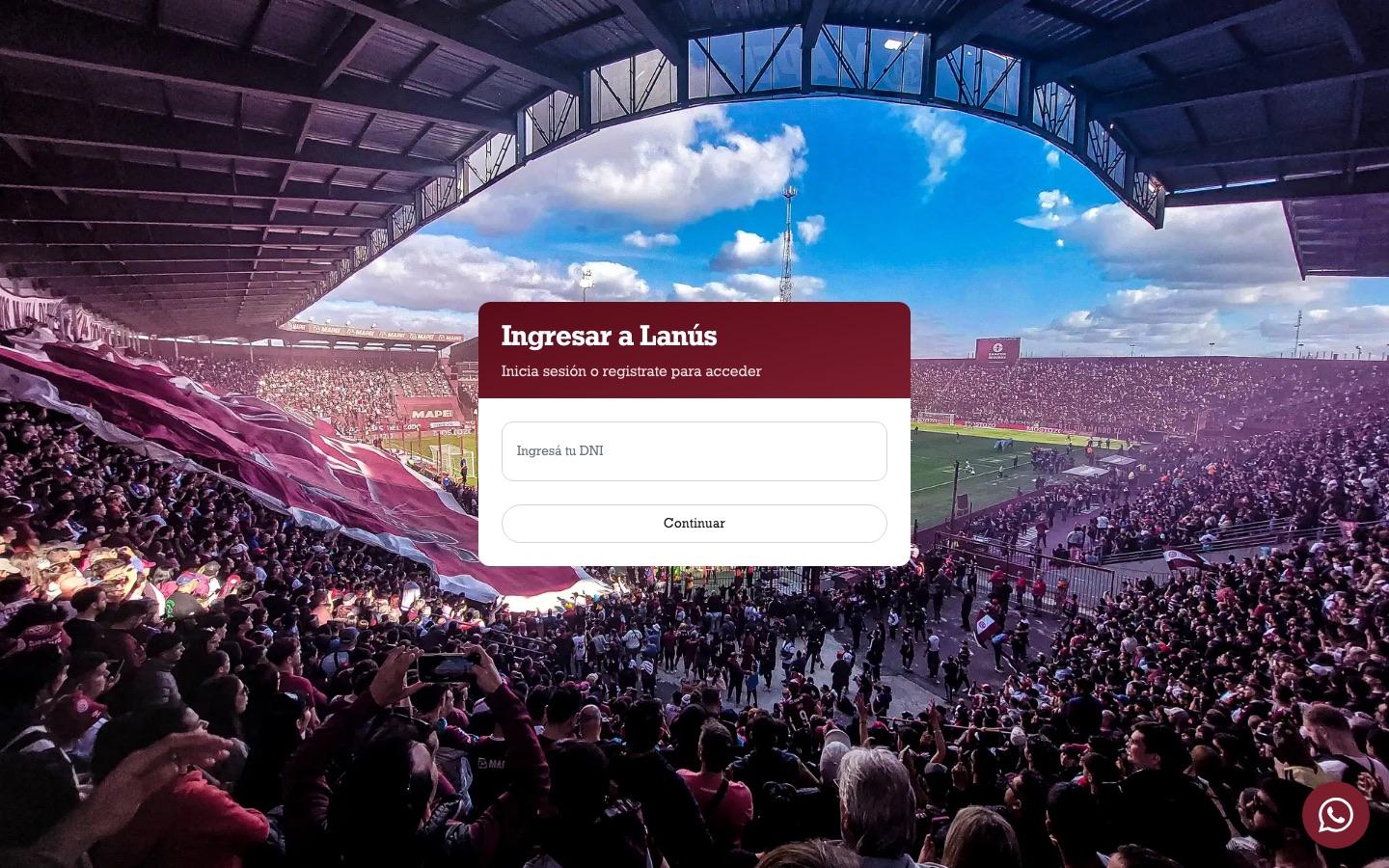
I designed and built Lanús ID end to end: the API, the sign-in site, the member web app and the mobile app.
- SSO on Better Auth. The national ID number (DNI) is the username, sessions are bearer tokens, organizations have roles, and other servers authenticate with API keys.
- Migration without resets. Moving from a hand-rolled JWT setup to Better Auth, I plugged in a custom bcrypt hasher so every existing password kept working.
- Sign-in for other sites. A site opens the sign-in page in a popup or redirect; after login the token goes back by
postMessageto the exact origin, checked against an allow-list. About ten sites and APIs depend on it today. - Identity verification against the scanned document, a fan achievements engine, facility reservations and medical clearances.
Tickets in the wallet
The vendor only gave us QR images. The pipeline I built:
- A small token-protected proxy reaches the vendor's API (with optional VPN egress when the vendor restricts locations).
- Admins upload ticket batches; tickets are assigned first-come-first-served by DNI.
- QR images are decoded and turned into Apple Wallet and Google Wallet passes.
- Members get an email; staff redeem the QR at the gate.
It started as a one-week tool that scanned the barcode on the ID card at the door, moved into the forms platform, and finally graduated into Lanús ID.
Mobile app
An Expo app with 25 screens: digital card, tickets, reservations, biometric unlock and deep links. Before launch I cleared the iOS 27 / Xcode 27 blockers (SDK upgrade, a config plugin for pod deployment targets) and realigned the app with the real API contract. Maestro end-to-end flows pass 11/11 on iOS.
Quality and security
- 100% coverage enforced in CI, integration tests against a fresh database branch per CI run, and a deterministic seed with one persona per role.
- An endpoint-matrix test walks the router and fails if any write endpoint lacks an integration test.
- Those suites surfaced real issues, which I fixed: reading another member's data by DNI, a token sent with a wildcard origin, password changes without the current password and an open redirect.
- Token validation measured at 18 ms p50 / 48 ms p95 in the test environment.